Lexmark MB2236adw vs Brother MFC-L2750DW: Compact Mono Laser MFPs Compared
Lexmark's compact, enterprise-derived MFP against Brother's small-office favorite. Build quality and security versus speed, cost per page and toner freedom.

On this page
The Lexmark MB2236adw and Brother MFC-L2750DW are both compact monochrome laser multifunctions aimed at small offices, but they come from very different design traditions. Lexmark builds its small machines down from an enterprise fleet platform. Brother builds its up from consumer volume manufacturing. Both approaches have real advantages.
Specifications side by side
| Specification | Lexmark MB2236adw | Brother MFC-L2750DW |
|---|---|---|
| Functions | Print, scan, copy, fax | Print, scan, copy, fax |
| Print speed | Up to 36 ppm (A4/Letter) | Up to 36 ppm (A4/Letter) |
| Print resolution | Up to 600 x 600 dpi with 2400 image quality | Up to 2400 x 600 dpi equivalent |
| Automatic duplex printing | Yes | Yes |
| ADF | 50-sheet, single-sided | 50-sheet, single-sided with reverse pass |
| Paper capacity | 250-sheet tray plus single-sheet manual feeder | 250-sheet tray plus single-sheet manual feed |
| Connectivity | Gigabit Ethernet, Wi-Fi, Wi-Fi Direct, USB 2.0 | Gigabit Ethernet, Wi-Fi, Wi-Fi Direct, USB 2.0, USB host |
| Display | 2.8 in colour touchscreen | 2.7 in colour touchscreen |
| Consumables | B231000 / B241H00 toner plus B220Z00 imaging unit | TN730 / TN760 / TN770 toner plus DR730 drum |
| Monthly duty cycle (approx.) | Up to 30,000 pages, recommended up to 3,000 | Up to 15,000 pages, recommended 200-2,000 |
| Dimensions (approx.) | 410 x 343 x 300 mm | 410 x 399 x 318 mm |
| Weight (approx.) | Around 12.5 kg / 27.5 lb | Around 11.8 kg / 26 lb |
On paper these look nearly identical, and in throughput terms they are close. The differences that matter are in the consumables model, the network stack and the security posture.
Running costs: the Return Program question

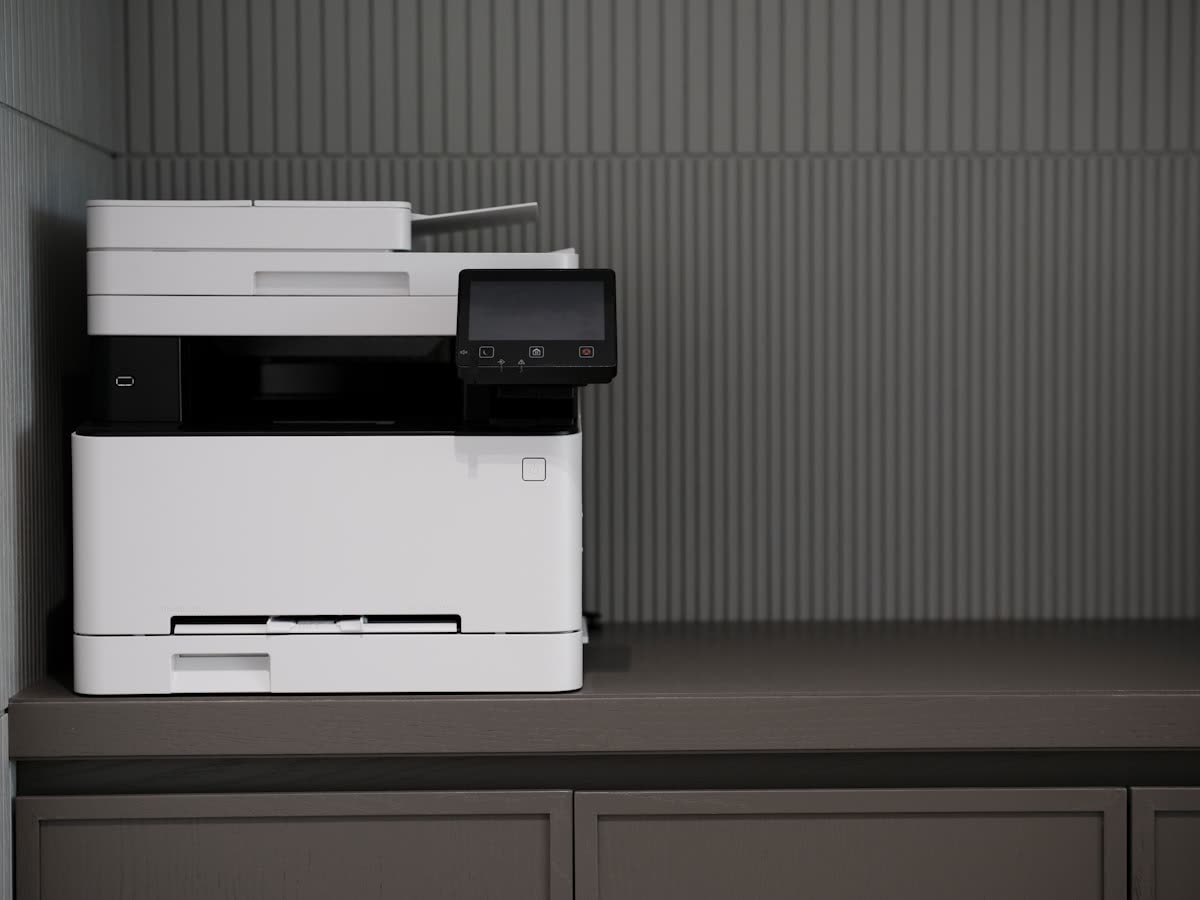
Lexmark sells two versions of most cartridges. Return Program cartridges are discounted on the condition that you return the empty to Lexmark and do not have it refilled. Regular cartridges cost more but carry no such condition. This distinction is the single most important thing to understand before buying a Lexmark.
| Consumable | Approx. US price | Rated yield | Cost per page |
|---|---|---|---|
| Lexmark B231000 Return Program toner | $85 | Around 1,200 pages | Around 7.1 cents |
| Lexmark B241H00 high-yield Return Program toner | $140 | Around 3,000 pages | Around 4.7 cents |
| Lexmark B220Z00 imaging unit | $80 | Around 12,000 pages | Around 0.7 cents |
| Brother TN760 toner | $90 | 3,000 pages | 3.0 cents |
| Brother TN770 toner | $110 | 4,500 pages | 2.4 cents |
| Brother DR730 drum | $110 | 12,000 pages | 0.9 cents |
Combined, the Lexmark lands around 5.4 cents per page with high-yield Return Program toner plus imaging unit, and the Brother around 3.3 cents with TN770 plus DR730. Brother is meaningfully cheaper, and the gap widens if you use compatible toner, because Brother's aftermarket is large and mature while Lexmark's is smaller and complicated by the Return Program conditions.
Reducing printing costs covers the duplex and toner-density settings that lower both figures.
Build, network and security
This is Lexmark's argument. The MB2236adw inherits its firmware, embedded web server and security model from Lexmark's enterprise fleet, which means genuine certificate management, 802.1X support, secure boot, encrypted hard-disk-free operation, and clear access controls. If your business has any compliance obligation, that matters.
Lexmark's paper path is also a step up. The steel-framed chassis and the rollers are noticeably more solid than Brother's, and Lexmark rates the machine for higher monthly volume. Over five years of moderate use, the Lexmark is more likely to still be feeding cleanly.
Brother's counter-argument is simplicity and cost. Its network stack is perfectly adequate for a small office, its web interface is clear, and it supports the same driverless standards. It just does not attempt enterprise-grade controls.
Who each printer suits
Choose the Lexmark MB2236adw if
- You need enterprise-style security controls in a small machine.
- The printer will be in daily business use and durability matters more than cost per page.
- Your IT provider already manages Lexmark devices.
- You want a solid, quiet paper path that tolerates mixed media.
- You are happy to buy genuine Lexmark toner for the life of the machine.
Choose the Brother MFC-L2750DW if
- Cost per page is your main criterion.
- You want a large, cheap choice of compatible toner.
- You want a USB host port for walk-up printing and scanning to a stick.
- Your volume is moderate and you want the lower purchase price.
- You are outside North America, where Brother's toner pricing is particularly strong.
Setup, apps and drivers

Lexmark's small MFPs are set up from the touchscreen and configured through the embedded web server. For desktop deployment, the Lexmark Universal Print Driver is the right tool, particularly if you have more than one Lexmark on the network, because a single driver covers the whole fleet. Mobile printing relies on AirPrint and Mopria Print Service rather than a consumer app.
Brother uses Brother Mobile Connect on mobile, or the full driver package on Windows and macOS. Its consumer-facing setup is friendlier and quicker if you are doing it yourself without IT support. Both work driverless through Windows printer settings using IPP.
Known weaknesses and common errors
Lexmark MB2236adw
The main frustrations are commercial. Return Program cartridge terms surprise buyers, high-yield toner is expensive at retail, and the compatible market is small. Lexmark also treats the imaging unit as a separate consumable, so you have two parts to track.
Technically the machine is reliable. The most common tickets are network configuration, particularly on segmented networks, and paper-tray sensor faults after heavy use. General diagnostics are covered in printer offline and driver installation failed, and model-specific help lives in our Lexmark printer support hub.
Brother MFC-L2750DW
Brother's recognisable behaviours all apply. The toner sensor produces a replace toner message early, and the drum end of life counter fires at 12,000 pages regardless of condition. Both have documented reset procedures where the part is genuinely still usable.
The Unable to Print 46 waste toner counter appears on high-mileage units. ADF rollers glaze after a few thousand sheets, producing skewed scans that clean up with a rubber-restoring wipe.
Regional availability and model names
- United States and Canada: both keep their model names. Lexmark uses B231000/B241H00 toner and the B220Z00 imaging unit; Brother uses TN730/TN760/TN770 with a DR730 drum.
- United Kingdom and Ireland: the MB2236adw is sold under the same name with the same cartridge numbers, though the Return Program terms are presented differently. Brother's MFC-L2750DW uses TN-2410/TN-2420 toner and a DR-2400 drum.
- Australia and New Zealand: Lexmark's model name is unchanged. Brother Australia sells the MFC-L2750DW with TN-2430/TN-2450 toner and a DR-2325 drum.
Lexmark keeps consistent global part numbers, which is genuinely convenient. Brother region-codes its toner, so cartridges do not cross markets.
Deployment and ongoing administration
For a single printer on a home network the administration difference is irrelevant: both are added in a few minutes and neither needs attention afterwards. The gap opens as soon as there is more than one machine or more than one site.
Lexmark's universal driver covers its entire range, so adding a second or third device is a matter of pointing the existing driver at a new address. Firmware, certificates and security policy can be pushed centrally, and access can be restricted per function, so you can allow copying but require authentication for scan-to-email.
Brother offers a management utility and remote setup tools, but the model is device-by-device and the security controls are coarser. For one to three printers that is entirely reasonable. Past about five, the administrative time Lexmark saves starts to outweigh its higher toner cost, which is why it appears in managed print contracts far more often than Brother does.
Verdict
Choose the Lexmark MB2236adw if the printer is a business asset rather than a household appliance. Better build quality, a stronger security model, a higher duty cycle and fleet-friendly drivers make it the right choice where uptime and compliance matter more than the cost of toner.
Choose the Brother MFC-L2750DW if cost per page is what you are optimising. At roughly 3.3 cents against 5.4, plus a far cheaper compatible market and a lower purchase price, it is the better economic choice for most small offices and home offices.
For a broader look at this class, see how to choose a home office printer and inkjet vs laser printers, or the Lexmark and Brother support hubs.
Software mentioned in this guide
- Apple AirPrint
Driverless printing built into iPhone, iPad and Mac iOS · macOS - Brother Mobile Connect
Brother's current mobile app for setup, printing, scanning and supplies iOS · Android - Lexmark Universal Print Driver
One driver for over two hundred Lexmark models Windows · macOS - Mopria Print Service
Cross-brand driverless printing and scanning for Android Android - Windows printer settings
How Windows installs printers, and the shift to driverless Windows Ready Print Windows
Printers covered here
Frequently asked questions
What is a Lexmark Return Program cartridge?
It is a discounted cartridge sold on the condition that you return the empty to Lexmark for recycling and do not have it refilled. The licence terms are printed on the box. Lexmark also sells regular cartridges at a higher price with no such condition, and those are the ones to buy if you want refilling freedom.
Which printer is cheaper to run?
The Brother, clearly. Around 3.3 cents per page with TN770 toner and DR730 drum amortisation, against roughly 5.4 cents for the Lexmark with high-yield Return Program toner plus its imaging unit. Brother's compatible toner market widens the gap further.
Does either printer scan double-sided in one pass?
No. Both have 50-sheet single-sided ADFs. The Brother can produce two-sided scans by reversing the sheet, which is slower. For single-pass duplex scanning you need a step up, such as the Canon imageCLASS MF445dw or HP LaserJet Pro M428fdw.
Is the Lexmark better built?
Generally yes. Its chassis, rollers and paper path are derived from Lexmark's enterprise platform and it carries a higher recommended monthly volume. In daily business use it is the more durable machine, which is part of what you pay for in higher toner prices.
Can I use compatible toner in the Lexmark?
Compatibles exist but the market is much smaller than Brother's, and firmware can reject some refilled Return Program cartridges. If cheap third-party toner is important to you, the Brother is the safer choice.
Do these model names change outside North America?
Lexmark keeps the MB2236adw name and part numbers globally. Brother keeps the MFC-L2750DW name but changes toner numbering: TN-2410/TN-2420 with a DR-2400 drum in the UK, and TN-2430/TN-2450 with a DR-2325 drum in Australia.
Technical writer focused on printer drivers, wireless setup and error-code troubleshooting.
Questions & comments (0)
No comments yet. Describe your printer model, operating system and the exact message you see; comments appear after review.
Ask about this page
Your comment appears after our team approves it. Or sign in to post faster.